
How to Measure View-Through Conversions Without Website Pixels
Digital marketers have long relied on pixel-based tracking to measure the effectiveness of display, video, and connected TV (CTV) advertising. However, for brands with strict privacy requirements, limited dev resources, or campaigns that span non-clickable environments like streaming video, a traditional pixel approach isn’t always feasible.
Fortunately, advances in data connectivity and identity resolution allow us to track view-through conversions (VTCs) without placing a pixel on your website. This post breaks down how pixel-free VTC modeling works, the benefits, and when it’s the right solution.
What Are View-Through Conversions?
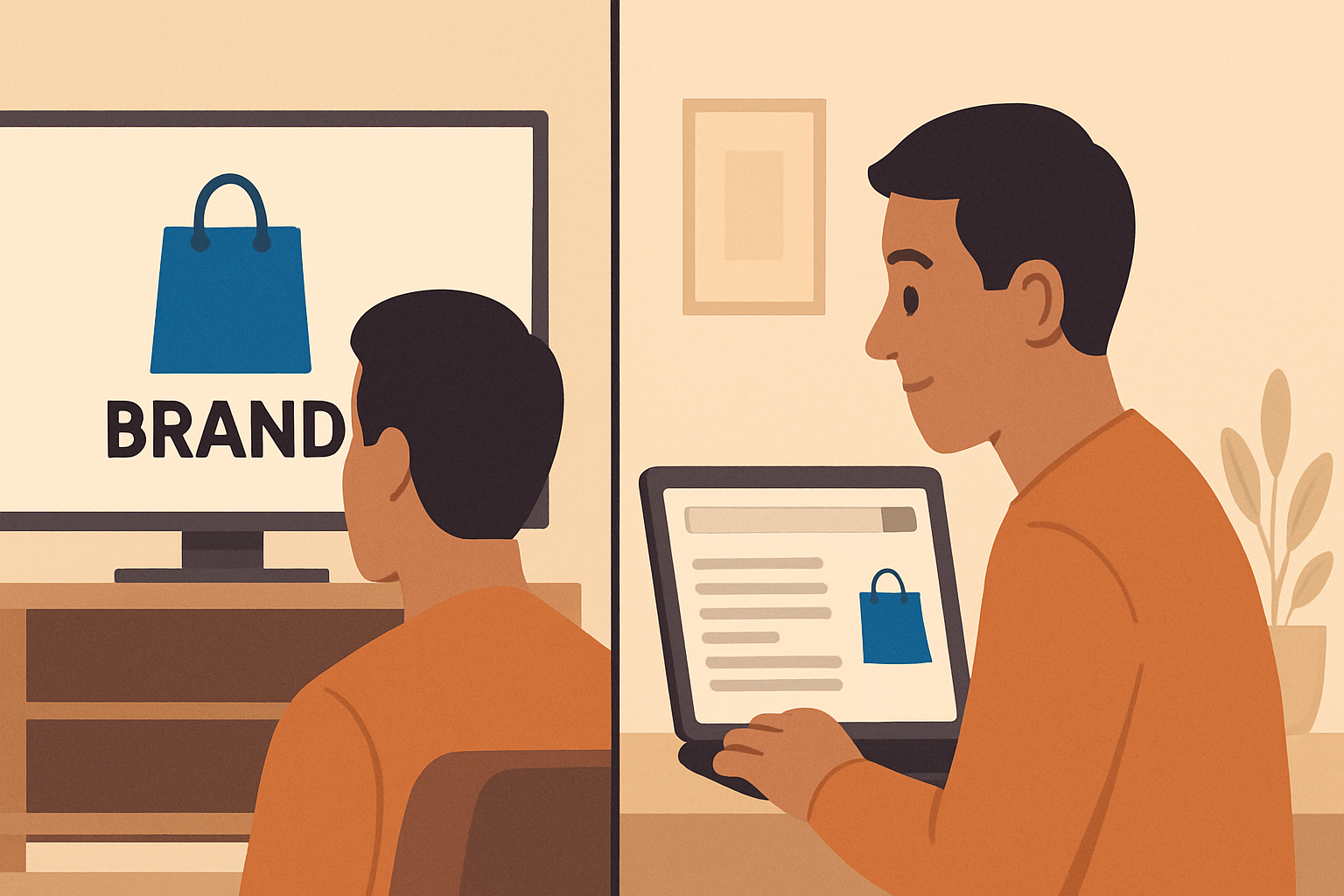
A view-through conversion occurs when a user sees an ad but does not click it, and later visits the advertiser’s website or completes a desired action within a defined time window (e.g., 1 to 30 days). VTCs are particularly important in non-click environments like CTV, streaming audio, and rich display formats where direct response isn’t always possible.
Traditionally, view-through tracking requires a conversion pixel on the advertiser’s site. But what if that’s not an option?
How Pixel-Free View-Through Conversion Modeling Works
Instead of relying on a site-side pixel, we leverage a combination of ad impression trackers, device graph technology, and 3rd-party behavioral data partners to model post-impression site activity. Here’s how the process works:
- Ad Impressions Tracked: Every ad we serve (whether display, video, or CTV) is embedded with an impression tracker. These trackers collect anonymized signals such as device ID, IP address, timestamp, and ad metadata at the moment the ad is viewed.
- Device Graph Matching: These signals are passed to a secure, privacy-compliant identity graph maintained by trusted data partners. Using deterministic and probabilistic matching, these graphs associate the ad view with a broader device or household identity.
- Web Activity Monitoring: Our data feeds continuously observe anonymized user activity across their network of publisher sites and apps where their trackers are already deployed. If the same device or household later visits your website (or related domains), they recognize that behavior.
- Modeled Attribution: Based on the matched device and timestamp logic, the system models whether the site visit or conversion likely stemmed from the prior ad exposure, even without a direct click or website pixel. This results in a modeled view-through conversion.
Benefits of Pixel-Free View-Through Conversion Tracking
This solution offers several key benefits, especially for advertisers in regulated or complex environments:
- No Pixel Placement Required: No dev lift or IT access needed to place tags or scripts on your website.
- Privacy-Safe: Compliant with GDPR, CCPA, and other privacy regulations. All identifiers are anonymized.
- Cross-Channel Attribution: Captures influence across CTV, digital audio, and non-clickable display environments.
- Inferred Consumer Intent: Understand post-view behaviors such as search, direct visits, or purchase activity.
- Fast Activation: Campaigns can be launched and measured without requiring tracking code approval cycles.
Ideal Use Cases
This approach is particularly useful in the following scenarios:
- Streaming or CTV campaigns with no clickable element
- High-awareness campaigns focused on site traffic and brand lift
- Advertisers with strict compliance requirements or pixel policy restrictions
- Brands running media across multiple channels that want unified attribution
What You Can Measure with Pixel-Free VTC Modeling
While not as granular as site-based tagging, this method still provides rich attribution insights, including:
- View-Through Visits: % of exposed users likely to visit the site post-ad
- Lift Over Control Group: Comparison between exposed and unexposed users
- Time-to-Visit Metrics: Average time delay between ad exposure and site visitation
- Breakdowns: By channel (CTV, display, audio), device type, creative variant, or geography
Data Partnerships and Compliance

We work with leading data providers and identity partners such as LiveRamp, Experian, TransUnion, Oracle , and others. These companies maintain robust, privacy-first identity graphs and behavioral networks that allow for high-confidence modeling of consumer behavior across the open web.
All data collection and analysis is done in compliance with applicable privacy regulations and data governance frameworks.
Final Thoughts
View-through conversions provide a more complete picture of campaign impact, especially in today’s multi-touch, cross-device advertising landscape. While traditional pixel-based attribution still has its place, pixel-free modeling offers a compelling, privacy-respecting alternative for modern advertisers.
If you’re running a CTV, audio, or display campaign and want to understand its downstream impact without altering your website’s code, pixel-free VTC modeling may be the right solution.
Contact us to learn more or request a demo of how this solution can work for your brand.
Put the insight to work.
Connect what you have learned to your next audience, media plan and campaign.
Discuss your campaign ↗
